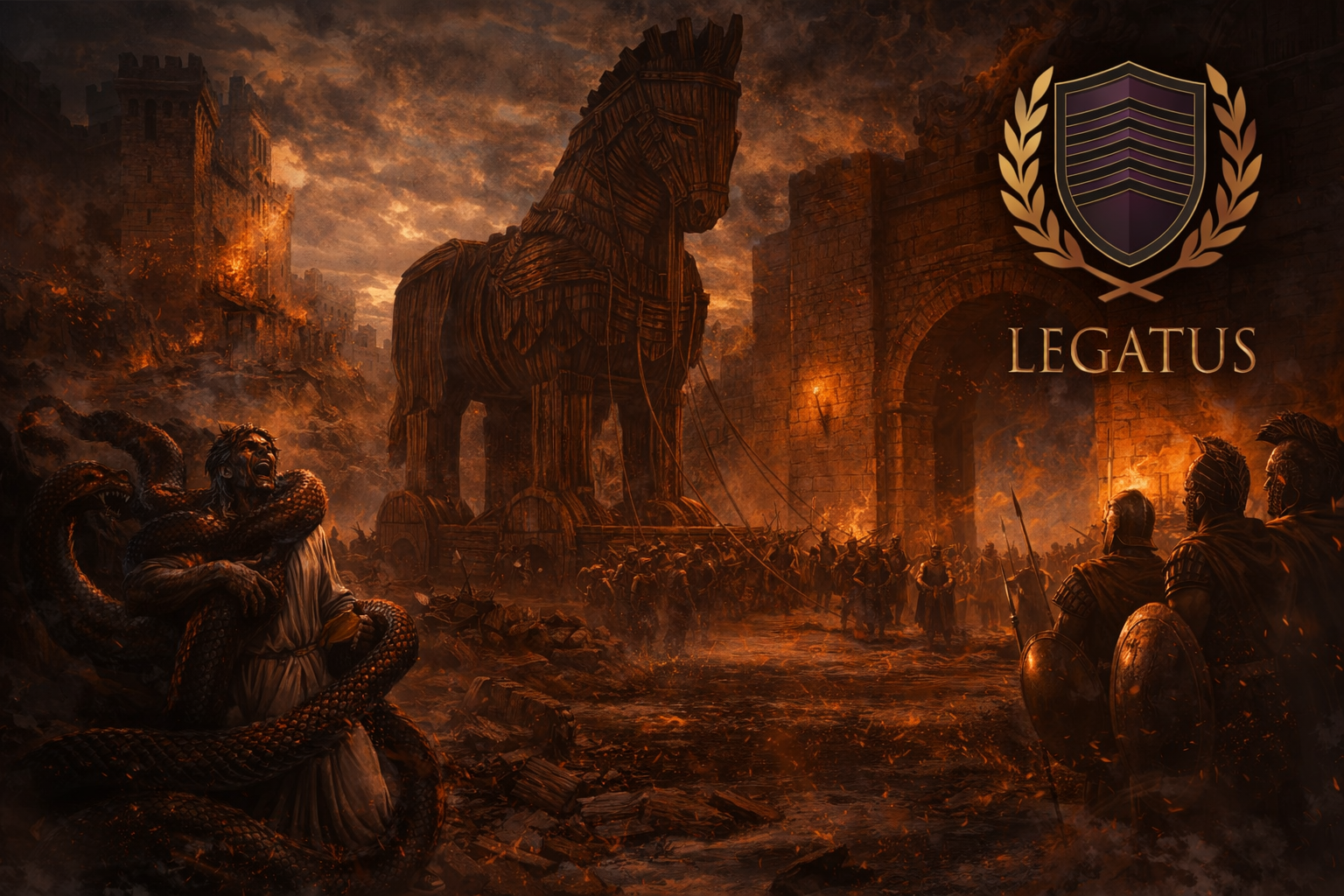
Many legends tell of the Trojan War and the freedom that the ancient gods allowed themselves to influence its course. A multitude of deities significantly influenced the outcome of the conflict between the Trojans and the Greeks. Even fate itself was an important actor in the play, appearing in the form of various prophecies. One of them predicted that the war would last ten years and that the Greeks would emerge victorious. However, until the very end, this outcome seemed impossible.
Despite the prophecy of their defeat, the Trojan soldiers fought bravely for years, foiling every plan the Greek army could devise to destroy the city. During this grueling period, the Trojans managed to both uphold their traditions and honor the wishes of the gods. Even through a period of violence, they maintained their honor. The seemingly invulnerable Trojans, however, soon encountered a trap from which they could not escape.
From the very beginning, the Trojans were up against not only a Greek army, but a force they could not match. The gods intervened wherever they saw fit to ensure the desired outcome. At one point, the warring parties came close to reaching a diplomatic settlement, but the goddess Athena disguised herself as a Trojan soldier and infiltrated their ranks. She persuaded the Trojan archer, Pandarus, to shoot an arrow at Menelaus, King of Sparta, thereby destroying any chance of a truce. The Trojans simply could not decide the outcome of this war. They were deprived of the freedom to do so.
The Greeks were also placed in the hands of fate, but they were treated much more kindly. Not only did the oracle favor them, but they also had many powerful gods on their side. When the great Greek hero Odysseus devised a cunning plan to infiltrate Troy, it was the involvement of one such god that ensured his success. The Greek forces pretended to retreat, leaving behind only a large wooden horse, which contained the strongest Greek soldiers, including Odysseus, in its belly. A soldier named Sinon also stayed behind to convince the Trojans that the horse was a sacrifice to the goddess Athena and that it was safe to bring it into the city.
Laocoön, a Trojan priest, tried to prevent this, fearing what the Greeks were planning. He wisely decided to throw a spear at the horse, planning to reveal its hollow interior by the sound of the blow. However, one of the gods intervened, sending two large sea serpents to strangle it before anyone could listen. Some sources say it was the god Poseidon, while others say it was Athena again, or even Apollo. In any case, the Trojans saw this as punishment from the gods for desecrating a sacred object, which led them to believe Sinon.
The Trojans did not listen to the advice of their priest, and became careless and opened the gates of their city. They paid a terrible price for that. The wooden horse passed the city gate and, under cover of night, the Greek soldiers came out of hiding. They signaled to the rest of their army and let them go to Troy. The city was destroyed, and the war ended as prophesied.
It took just one moment of carelessness in ten long years to destroy the hitherto invincible Troy. Despite the Trojans possessing almost all the virtues needed to defend their home, their lack of discipline allowed the enemy to penetrate. In the silence of their mistake lies the clear importance of cultivating the virtues one already possesses.
This legend serves as a reminder of the mission of the Legatus. Virtue alone cannot lead to victory. Her path is built step by step. Her path is built with consistency.