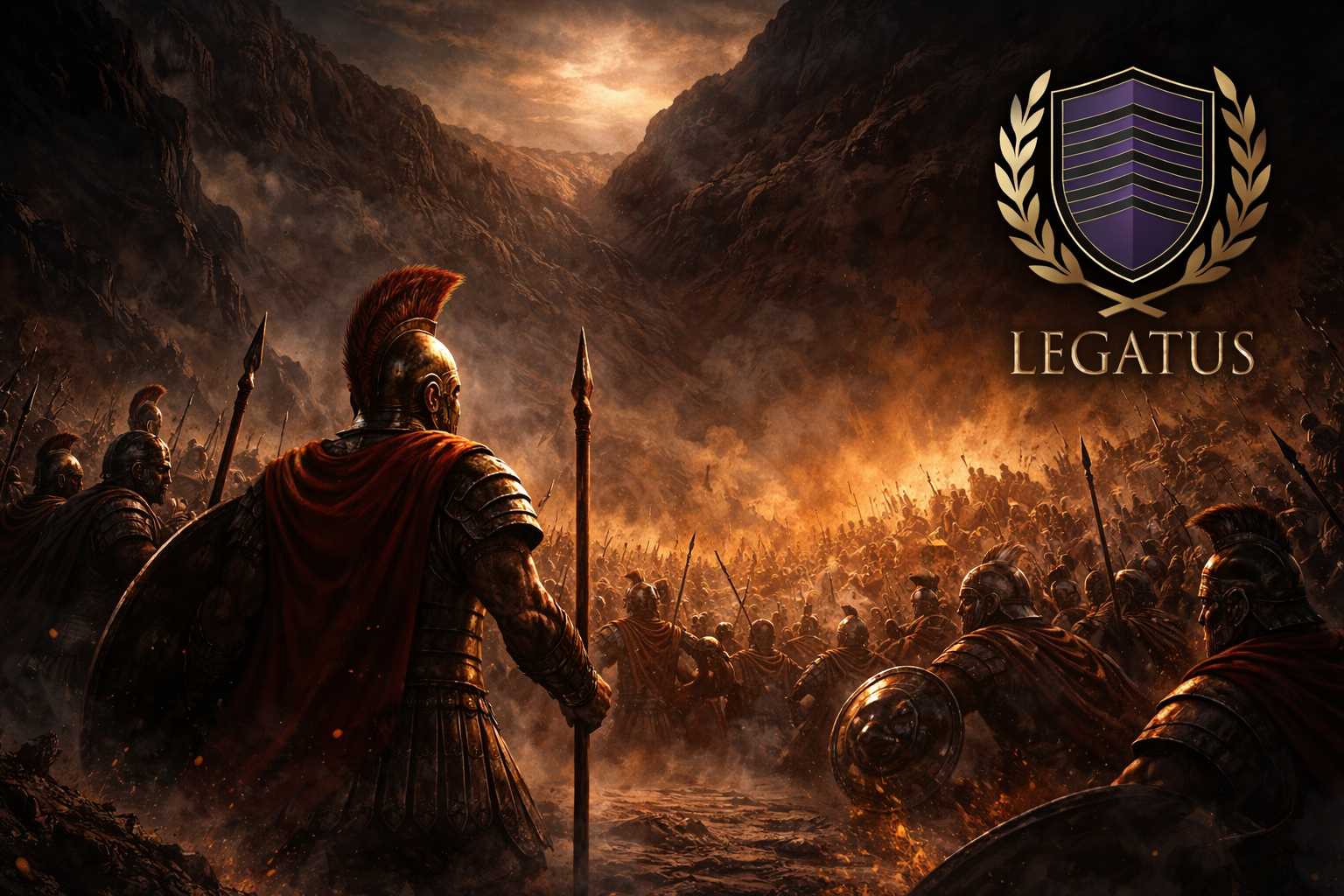
On the day this story begins, Greece has been under attack by Persia for over a decade. During that time, the tide of battle has turned several times, and the Persian king Darius the Great has died, leaving his mission to his son Xerxes to carry it out. Now, in 480 BC, what is probably the largest Persian army the Greeks have ever faced is rapidly advancing through their land, conquering city after city.
However, just when it seemed that nothing could stand in their way, the Persian soldiers came across the narrow pass of Thermopylae, and within it they saw a Greek army ready for battle. This army, led by the Spartan King Leonidas, consisted of approximately 7,000 men, of whom about 300 were Spartans. Although these 300 soldiers would become the main symbol of the battle for their heroism, they were not alone.
As some historians will point out, the Greek soldiers who gave their lives at this historic juncture were men who had the freedom to do so. In this they are clearly distinguished from the vast swarm of hostile imperial subjects, forced to rush into battle. Regardless of the outcome of the battle, this inner freedom was something that could not be taken away from them.
Fueled by a desire to avenge his father's failure, Xerxes knew he could not afford to wait. The only way to continue his march was for his troops to force their way through the gorge, which would be a challenge. Although the Greeks were vastly outnumbered, their decision to fight this battle in a confined space proved wise. It not only gave them a fighting style that suited them better, but it also nullified the Persian forces' strategies that required space and distance. Even their overwhelming numbers quickly became a disadvantage in such an environment.
The defenders, on the other hand, were in a position to their advantage. Using the terrain, their equipment, and their already acquired skills, they managed to suppress every Persian division that entered the pass for two full days. The weapon that enabled them to successfully defend Thermopylae was discipline. It was only with the help of a Greek traitor that the Persians were able to discover a hole in their shield.
A Greek living nearby revealed to the Persian army that there was a small path leading along the mountain overlooking the pass, to a point behind the Greek lines. This path allowed the Persians to outflank the Greeks on the morning of the third day. Most of the Greek forces withdrew before the attack, but Leonidas remained with 300 Spartans and 700 Thespians to give them time to escape.
Much has been said about the soldiers who perished in the gorge on the third day, but what remains consistent in every version of the story is their courage. When Persian reinforcements soon arrived, they found themselves in hopeless circumstances, but they did not flee. Not even in the face of certain death. What motivated them was not only their instinctive will to live, but also their noble desire to protect what was most important to them. In their last stand, they died with honor.
The Persian army continued to occupy central Greece, but this battle was not in vain. Just a few months later, the Greek soldiers applied the knowledge gained in the gorge, using the narrow space in the Straits of Salamis to destroy the Persian fleet. The symbolic significance of the last stand cannot be ignored either, as it showed what it means for someone to stick to their values, even when there is no personal benefit to be gained from it. It showed what it means to put everything on the line for the common good.
This is what builds the spirit of Legatus: the insight to learn from mistakes, the strength to adapt and overcome obstacles, and the determination to do what is right, no matter the cost. A promise of eternal quality.